
832-745-3320



Lymphatic Drainage vs Compression | Detoxity Woodlands
September 4, 2026
After liposuction, a tummy tuck, breast surgery or another procedure that reshapes tissue, swelling can feel like the slowest part of healing. That is why lymphatic drainage vs compression is one of the most common questions we hear. Both are often recommended for comfort, fluid control and recovery. They are not the same thing, though, and the right plan depends on your procedure, where you are in recovery and what your surgeon tells you.
Wellness clients get confused by this too. A compression garment feels like firm, steady support. A manual lymphatic drainage session feels light, calm and surprisingly gentle. Each one has its own job. Knowing those jobs helps you make confident choices about your recovery care, whether you live in The Woodlands or drive in from Spring or Conroe.
WHY POST-SURGICAL SWELLING NEEDS CAREFUL SUPPORT
Swelling is a normal response to surgery, injury and inflammation. Surgery briefly disturbs tissue and tiny vessels, so fluid can collect in the treated area. The body slowly reabsorbs that fluid, but it takes time.
The point is not to rush your body faster than it can safely go. A smart recovery plan supports circulation, eases discomfort, protects healing tissue and keeps you on the timeline your surgical team set. That is where manual lymphatic drainage and compression can each play a useful part.
WHAT MANUAL LYMPHATIC DRAINAGE DOES
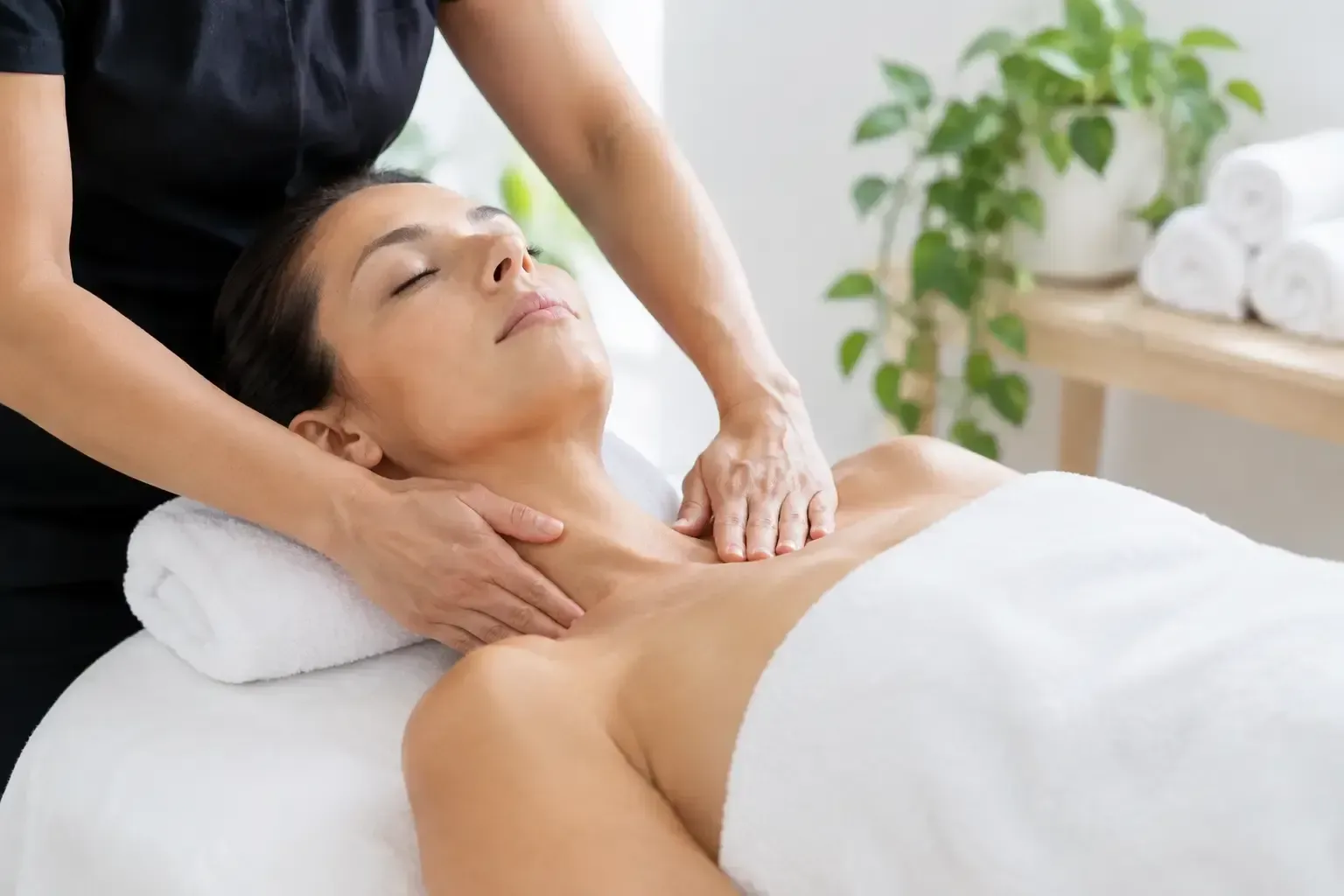
Manual lymphatic drainage, or MLD, is a specialized hands-on technique built on very light, rhythmic strokes. It is not deep-tissue massage. There is no heavy pressure, kneading or digging into sore spots. The strokes are meant to guide fluid along lymphatic pathways toward areas of the body that can clear it.
After a proper assessment and medical clearance, post-surgical lymphatic drainage may help you feel less tight, heavy or congested as swelling shifts. It can also be a calming break during a demanding recovery. Many clients value that each session is gentle and shaped around their stage of healing, not a one-size routine.

LYMPHATIC DRAINAGE IS NOT A DEEP MASSAGE OR A SHORTCUT
After surgery, more pressure is not better. Forceful massage can raise pain, irritate fragile tissue or work against your surgeon's plan. A trained provider knows how to adjust touch, positioning and session timing around your specific procedure.
MLD also should not be sold as a cure for every kind of swelling. It is supportive care. It does not replace surgical follow-up, medical evaluation, movement guidelines, prescribed medicine or compression when your surgeon calls for it. Results and the number of sessions vary with your procedure, health history and how your body heals.
WHAT COMPRESSION GARMENTS DO
Compression applies outside pressure to support the treated area. After cosmetic surgery, that usually means a surgeon-recommended garment such as a faja, surgical bra, abdominal binder, sleeve or stocking. In other cases, compression may be prescribed for vein issues, lymphedema management or lower-leg swelling.
Steady pressure can help limit pockets where fluid might gather, add a feeling of stability and support tissue while it mends. Many post-op clients find that an approved garment makes daily movement more comfortable early on, whether that is getting out of bed or sitting through the I-45 commute
Fit is everything. If a garment rolls, bunches, leaves sharp dents, causes numbness, changes skin color or makes breathing hard, it needs attention. Tighter is not automatically better. Compression should feel supportive, never painful or overly restrictive. Wear it exactly as your surgeon directs for style, pressure level and hours per day.
LYMPHATIC DRAINAGE VS COMPRESSION: KEY DIFFERENCES
The simplest difference: manual lymphatic drainage is a treatment a provider gives you, while compression is a tool you wear between visits. MLD uses gentle, targeted touch for a set session. Compression gives steady outside support for hours or days, based on medical guidance.
They feel different, too. Lymphatic drainage is usually soothing and light, which is welcome when your body is tender. Compression is firmer and constant. It may not feel luxurious, but when prescribed it can be a key part of protecting your surgical result.
Timing sets them apart as well. Your surgeon decides when compression starts, whether you can take breaks and when to switch garments. Lymphatic drainage needs careful timing too. Some clients are cleared for gentle sessions early, while others must wait because of drains, incisions, complications or procedure-specific limits.

HOW MLD AND COMPRESSION CAN WORK TOGETHER
For many post-surgical clients, this is not a choice between one or the other. With surgeon approval, the two can complement each other. A session may ease areas of temporary fluid buildup and tightness, and a well-fitted garment can keep that support going afterward.
Order and frequency should be personal. Someone healing from a mommy makeover may need a different plan than someone recovering from a breast reduction or liposuction. Clients with heavy swelling, a history of circulation problems or a more complex procedure need closer clinical guidance than someone with a smooth recovery
At Detoxity Holistic MediSpa in The Woodlands, recovery care is built around that kind of personal plan. The goal is not booking the most sessions or buying the tightest garment. It is thoughtful support that respects your procedure, your comfort and your medical instructions.
How Detoxity supports your recovery:
- Enhanced manual lymphatic drainage led by a certified lymphedema therapist who works within your surgeon's plan
- Physician-supervised care with a physician on site, and post-op clients can book a physician visit
- Surgical drain removal, especially for clients who had surgery out of town
- "We don't guess, we test", so our on-site physician can order labs when your recovery calls for it
WHEN TO PAUSE AND CALL YOUR MEDICAL TEAM
Neither massage nor compression should be used to push past symptoms that need medical care. Call your surgeon or healthcare provider right away if you notice growing redness, warmth, severe or worsening pain, fever, drainage from an incision, sudden swelling on one side, shortness of breath, chest pain or calf pain. If symptoms feel severe or sudden, seek emergency care.
Get professional advice before lymphatic work if you have an active infection, a known or suspected blood clot, uncontrolled heart or kidney disease, certain active cancers or swelling with no clear cause. Compression is not right for everyone either, especially with certain arterial circulation problems, nerve issues or skin complications
A trustworthy recovery provider welcomes contact with your surgical team and will never nudge you to ignore your restrictions. Your body deserves care that feels nurturing and stays inside safe limits.

Choosing the right support for you
Begin with your surgeon's post-op instructions, since they come before any general advice. Ask whether manual lymphatic drainage fits your procedure, when you can start, how often it may help and which compression garment is recommended. Bring those answers to your recovery appointment so your provider can work inside your care plan.
If you want wellness support rather than post-op care, think about your goal. Gentle lymphatic work can be a relaxing choice when you feel puffy or sluggish, especially during a humid Houston summer. Compression makes more sense when a qualified clinician has advised it for circulation or fluid control. Neither has to be a one-size ritual.
The most reassuring plan leaves room for your body to respond. Pick care that is informed, gentle and in line with your medical guidance, then give yourself permission to heal at a human pace.
Not sure what your recovery needs?
Visit Detoxity Holistic MediSpa at 329 Sawdust Rd, The Woodlands, TX 77380, serving Spring, Conroe and greater Houston. Call or text 832-745-3320 to book enhanced lymphatic drainage or post-surgical recovery care once your surgeon has cleared you.

the perfect spa gift!

Ultimate spa STRESS RELIEF

Plan a calmer healing period with top post liposuction recovery essentials, from compression and hydration to personalized, surgeon-approved supportive care.

Wondering if EBOO therapy hurts? Learn what a session really feels like, how to prepare and why physician supervision matters at Detoxity in The Woodlands.

Training hard in the Texas heat? Learn which IV drips help athletes recover, when IV hydration makes sense and how Detoxity personalizes every drip.

Physician supervised wellness treatments pair personalized screening and restorative care to support hydration, recovery, stress relief, and wellness goals

Heavy legs, cold hands or post-op swelling? Simple daily habits to improve circulation naturally, plus how lymphatic drainage at Detoxity can help.
Recovering from lipo, tummy tuck, or a BBL? Learn how often to book lymphatic drainage massage, when to start, and how to reserve your recovery sessions at Detoxity

Our guide to HOCATT ozone therapy explains what a session feels like, who should pause, and how to prepare for a calm, informed wellness visit today.

A calm, surgeon-first roadmap for post-op recovery: prep, swelling, lymphatic
drainage, nutrition and warning signs. Recovery care in The Woodlands, TX.